
Rug Sizes
1. Small Decor & Accent Rugs: Perfect for bedside, bathroom, or wall art.
- 2 x 3.5 ft: Small bedside rugs (especially for Margoum).
- 3.3 x 5 ft: A standard small "area rug". (All 3 variants)
2. Hallway Runners
- 2 x 8 ft / 2.5 x 9 ft: Standard runners, for Margoum and Zarbeeya styles.
- 2.5 x 11.5 ft: Extra-long runners, for Margoum and Zarbeeya styles.
3. Medium Living & Bedroom Rugs
- 3.5 x 6 ft: / 4.5 x 6.5 ft: Excellent for home offices or small seating nooks. (All 3 variants)
- 5 x 8 ft / 5.5 x 8.5 ft: The "standard" living room size for medium-sized rooms. (All 3 variants)
4. Large & Grand Carpets
Zarbeeya and large Margoums:
- 6.5 x 10 ft: This is the anchor-size for a formal living room.
- 8 x 11.5ft: A bigger size for a formal living room.
- 10 x 13ft: Usually reserved for very large dining rooms or open-plan style homes.
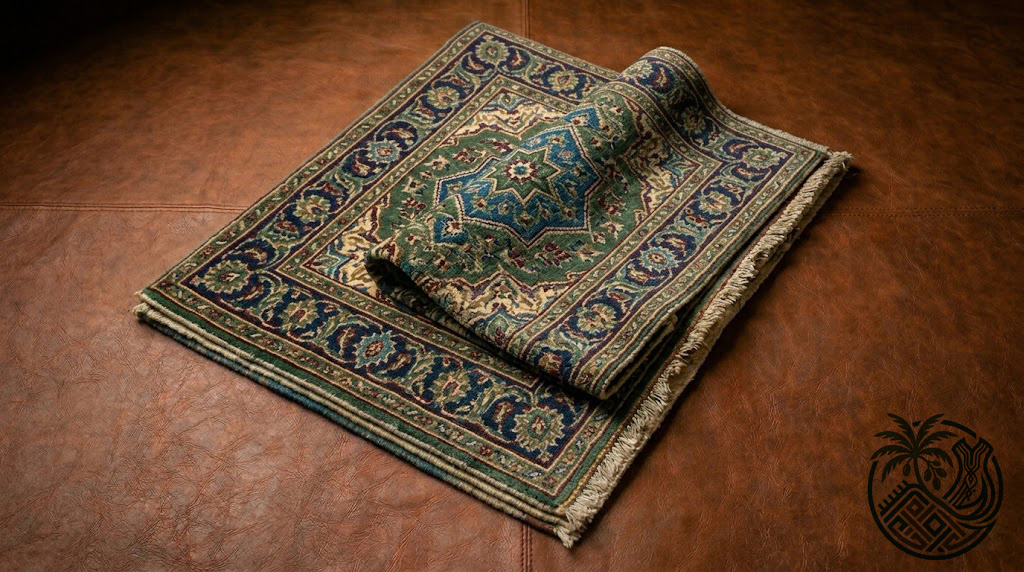
If the Margoum is the soul of the rural oases, the Kairouan Carpet (Zarbeeya) is the crown jewel of Tunisian urban craftsmanship. Originating in the holy city of Kairouan—the first capital of the Islamic Maghreb—these knotted wool carpets are world-renowned for their density, luxury, and artistic complexity.
Unlike flat-weaves, the Zarbeeya is a high-pile, hand-knotted carpet. Its quality is strictly measured by the number of knots per square meter:
- Standard: 10,000 to 40,000 knots/ m2
- Fine: 65,000 to 90,000 knots/ m2
- Extra-Fine (Silk or Fine Wool): Can exceed 250,000 knots/m2The more knots, the finer the detail and the more durable the carpet.
A high-quality Kairouan carpet can last for generations, becoming more beautiful as the wool softens with age.A classic Zarbeeya follows a very specific structural hierarchy:
- The Central Medallion: Usually a large, hexagonal or diamond-shaped centerpiece that symbolizes a garden, a fountain, or a celestial star.
- The "Field": The open space surrounding the medallion, often left in a solid color to create a sense of vastness.
- The Borders: A Zarbeeya must have a series of parallel frames (usually three to seven layers). These borders are filled with "Alloucha" (natural wool colors) or floral motifs like the jasmine flower or the henna leaf.
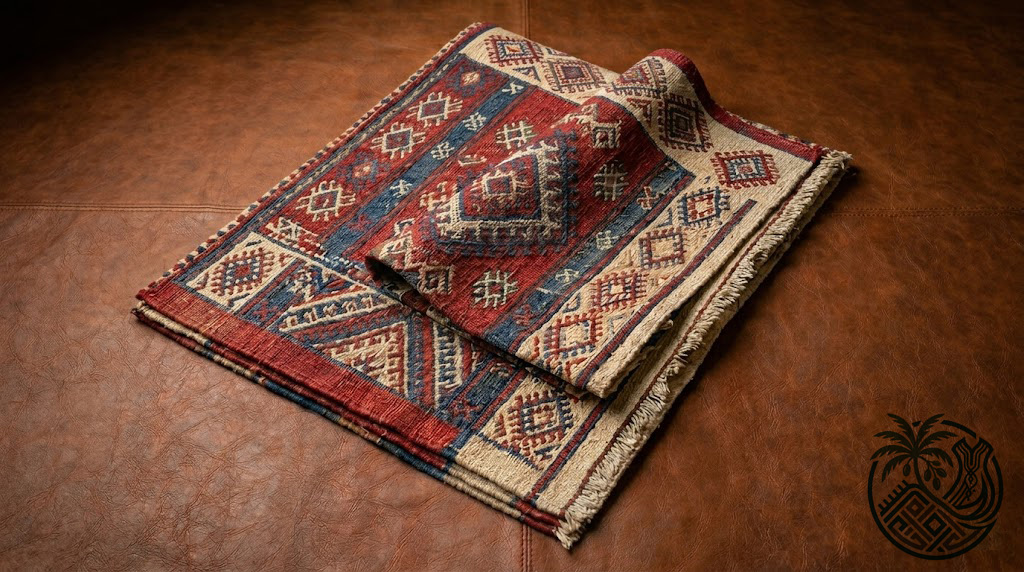
The Margoum (or Merguoum) is more than just a floor covering; it is a storied art form that serves as a visual language for Tunisia’s rural Berber communities, particularly in regions like Oudref and Kairouan.Unlike the plush, high-pile "Zarbeeya" (knotted carpets), the Margoum is a flat-weave textile. It is crafted on a vertical loom. The weaver "embroiders" the patterns directly into the warp while weaving. This results in a durable, reversible, and lighter rug.
The defining characteristic of a Margoum is the Regma—the intricate geometric vocabulary used by the artisans. These aren't just decorative shapes; they are ancient symbols often tied to:
- Protection: The diamond (representing the eye) is frequently used to ward off the "evil eye."
- Fertility and Nature: Small triangles and zigzag lines often symbolize mountains, water, or seeds.
- Identity: Every weaver may add a unique variation, making each Margoum a one-of-a-kind "signature" of the woman who created it.
Traditionally, the Margoum is celebrated for its use of natural dyes.
The Base: Usually made from pure unbleached wool, providing a creamy or beige canvas.
The Patterns: Dominant colors include deep madder red, burnt orange, indigo blue, and forest green.
Modern Twist: While traditional versions favor earth tones, modern Margoums often experiment with minimalist grey scales or vibrant neon accents to fit contemporary interior designs.
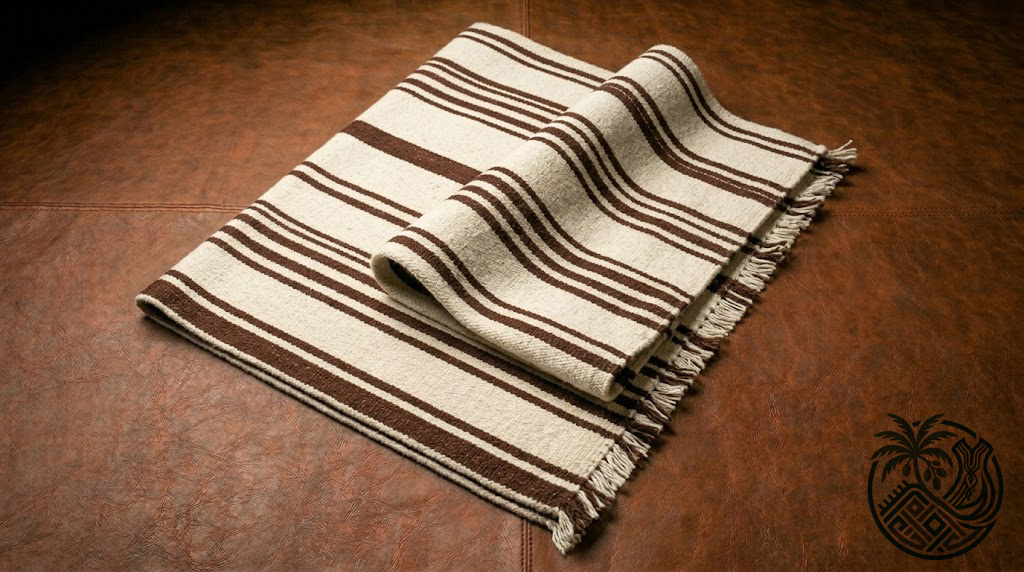
While the Zarbeeya is a product of the city, the Medenine Carpet is a product of the desert. Hailing from the governorate of Medenine—home to the famous "Ksours" (fortified granaries) and the island of Djerba—these rugs are a testament to the resilience and resourcefulness of the nomadic and semi-nomadic tribes of Southern Tunisia.
The Medenine Carpets are very durable because they were originally made for life on the move, these rugs are incredibly tough. They are woven with a tighter, thicker yarn than the Margoum, making them resistant to sand and wear.Unlike the busy, symmetrical medallions of Kairouan, the Southern style embraces a more minimalist, "modern" look that predates modernism by centuries. In fact, the Medenine carpet is easily identified by its bold, horizontal symbolic Stripes that tell a story. Wider bands represent the vast desert plains, while thinner lines represent the paths taken by caravans.
The Medenine Carpets have seen a massive resurgence in contemporary interior design thanks to their:
- Bohemian Appeal: Their raw, "unpolished" look fits perfectly with Boho-Chic and industrial decor.
- Versatility: Because they are thin and durable, they are often used as wall hangings in modern homes, acting as a piece of "textile art" rather than just a rug.
- Sustainability: They are essentially 100% organic, using unbleached wool and natural tannins, making them the ultimate eco-friendly home accessory.
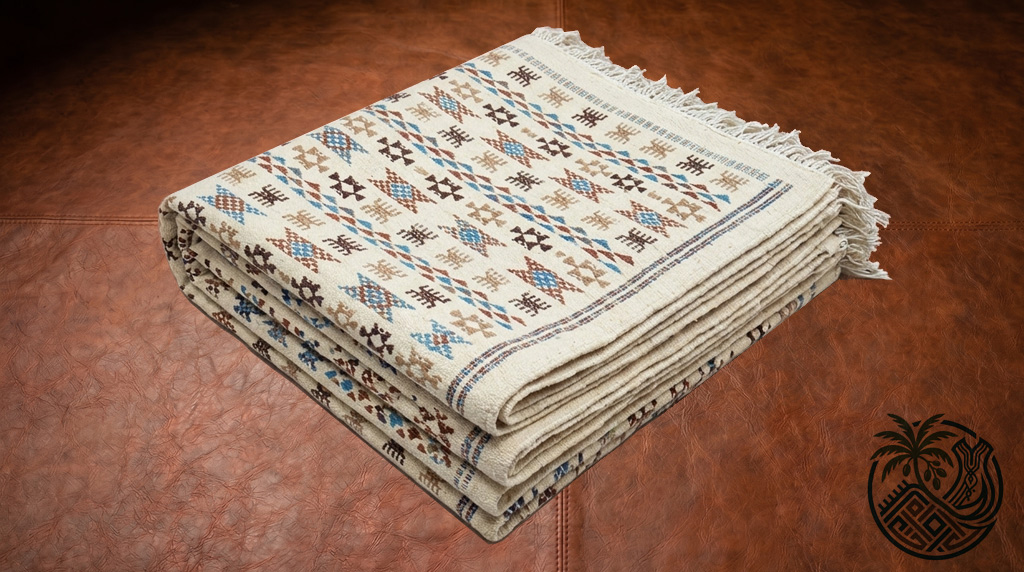
Kilims are traditional, hand-woven flat-weave rugs crafted by the indigenous Berber tribes of North Africa. Renowned for their distinct character and cultural heritage, these rugs are a true celebration of traditional craftsmanship and functional artistry.
Artistry & Symbolism
Unlike high-pile rugs, Kilims are woven without a pile, resulting in a lightweight, durable, and reversible textile. They are immediately recognizable by their intricate geometric patterns, which include diamonds, triangles, chevrons, and stylized tribal motifs. Each design is more than just decoration; the woven symbols represent a visual language, carrying ancestral stories and themes of protection, fertility, and the natural landscape.
Materials & Colors
- Pure Wool and Cotton: Traditionally hand-spun from high-quality local sheep's wool or natural cotton, ensuring excellent durability and a soft, authentic feel underfoot.
- Natural Palette: While many feature a classic natural ivory or cream base, others incorporate a vibrant array of earthy reds, deep blues, ochres, and greens derived from traditional mineral and plant dyes.
Versatile Style
With their clean lines and striking geometric layouts, Kilims bridge the gap between ancient heritage and modern interior design. Their low-profile texture makes them highly versatile—perfect for high-traffic areas, layering over larger carpets, or hanging as unique wall art to introduce warmth, history, and texture to any space.